Brand Center & Self-Service Tools
The Problem
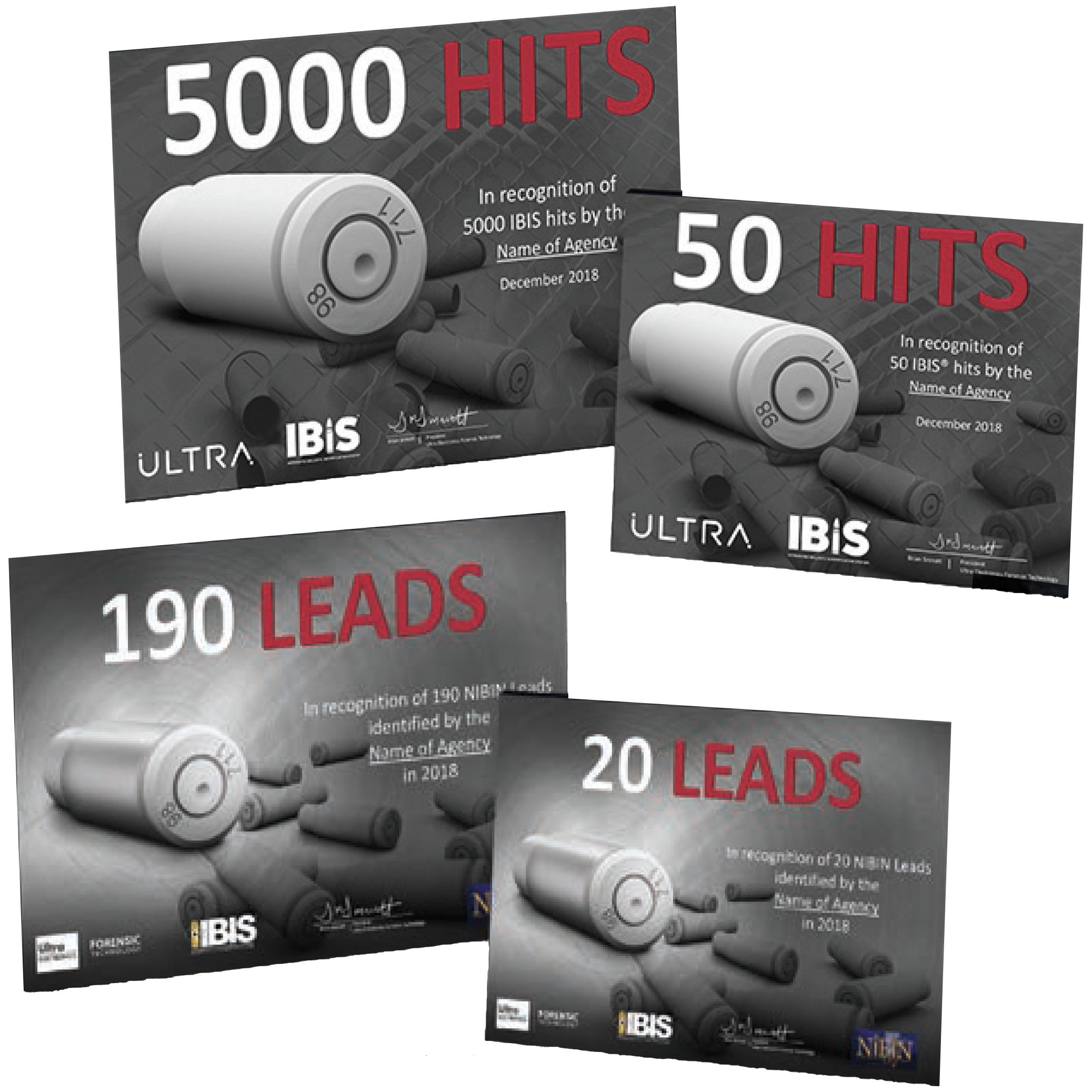
One of the first recurring production jobs I inherited at LeadsOnline was a customer-recognition plaque program for our ballistics products. When an agency reached a milestone in the national or international ballistics databases, one of our Customer Engagement Managers would request a plaque to commemorate it.
The original template needed to be updated to match the current brand, but the bigger problem was the workflow itself. For about a year, I spent roughly 10 to 15 hours each week creating three to five plaques, sending proofs for customer approval, making revisions, and placing the final orders. The work mattered to the customer relationship, but almost every design decision had already been made. I was spending a meaningful part of each week manually producing variations of the same thing.
I kept looking for a way to remove myself as the bottleneck without giving up control of the brand. I explored Canva and Adobe Express templates, but neither gave me enough control over what users could change, what needed to stay locked, or how the final print file was produced.
The plaque program existed long before the tool. My first step was updating the aging visual template; the larger opportunity was redesigning the production process behind it.
From Template to Tool
In early 2026, AI-assisted development gave me a practical way to build the tool I had been trying to find off the shelf. Instead of giving CEMs a blank canvas, I could define exactly which decisions belonged to them and lock everything else: brand colors, typography, proportions, required logos, print dimensions, and layout behavior.
The first version became the Plaque Builder. A CEM could select the milestone type, enter the agency information, choose an approved logo, and export a print-ready PDF for customer approval and ordering. The same work that had moved through me as a design request could now be completed directly by the person who needed it, without asking them to become a designer.
I used Claude to accelerate much of the implementation, but it rarely arrived at the experience I wanted on its own. I had to direct it very specifically, test what it produced, and often work directly in the HTML, CSS, and JavaScript to refine the interface and interactions when the generated result didn't match what I had in mind.
Designing the Guardrails
The harder work was still design work: deciding what users should be able to edit, what needed to stay protected to preserve the brand, how much flexibility each tool could support, and where the interface needed to guide users rather than simply give them more options. Claude helped me move faster, but the tools only became useful through repeated cycles of direction, testing, adjustment, and hands-on refinement.
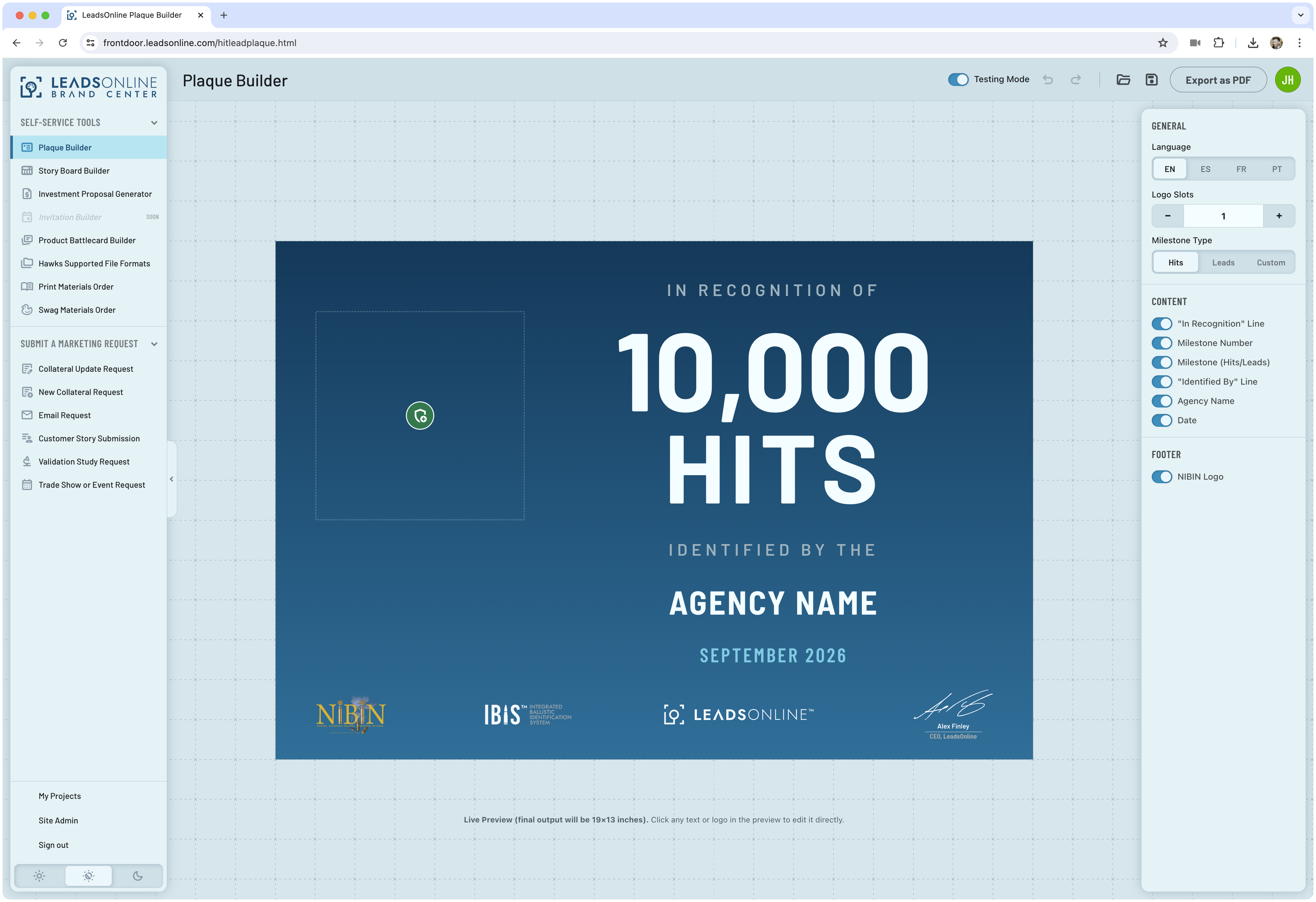
The Plaque Builder keeps the layout and brand system fixed while exposing only the content choices a CEM actually needs.
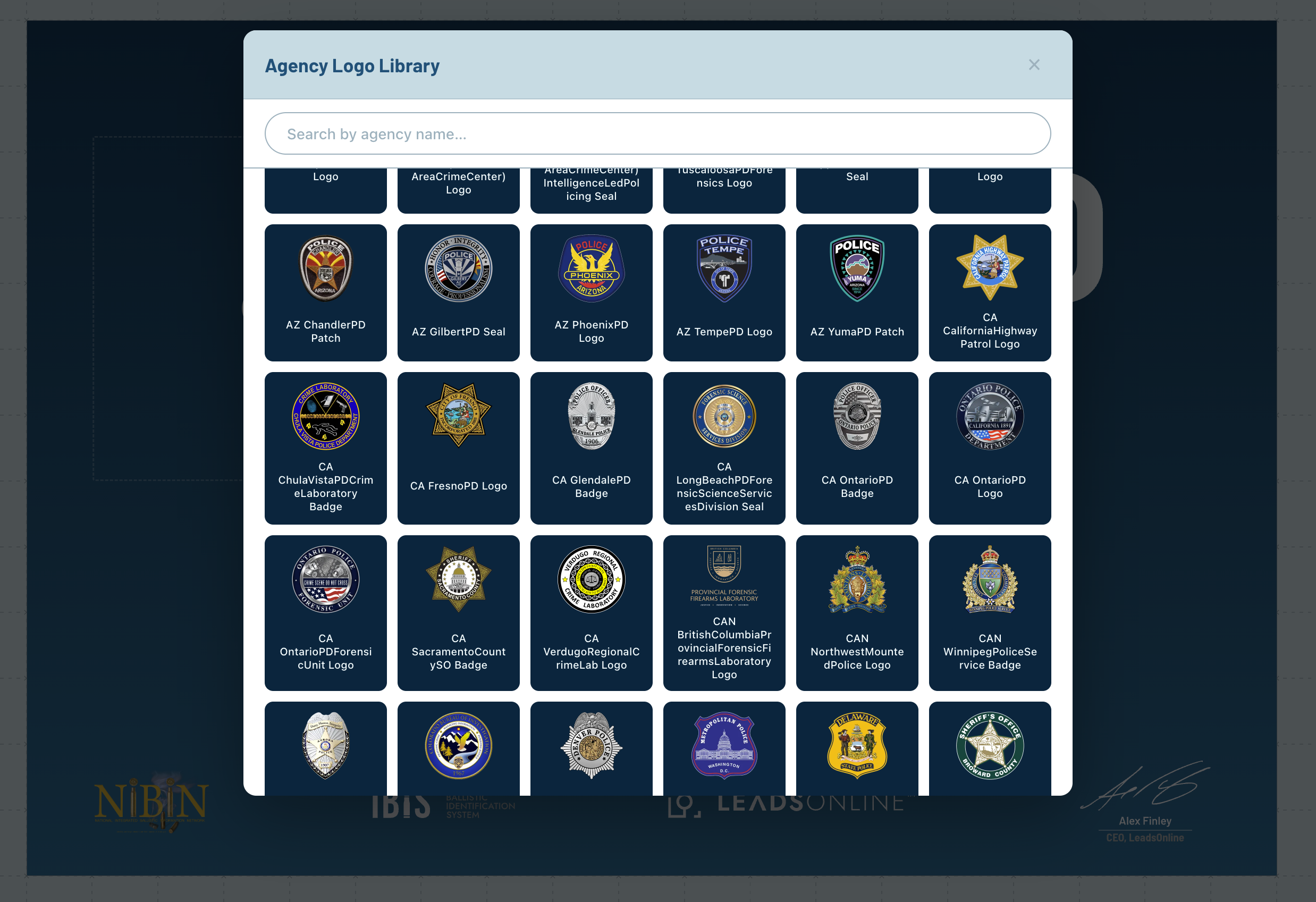
A shared agency-logo library removes another repetitive step and keeps approved artwork available for future projects.
The goal wasn’t to give everyone design software. It was to give people exactly the choices they needed, and take everything else off the table.
One Tool Became a System
Once the Plaque Builder was working, I started looking at other recurring work the same way. The next obvious candidate was the Story Board Builder, used to create large-format customer stories about cases solved with our ballistics products.
Story boards were a much harder problem than plaques. The amount of copy could vary dramatically, customers might provide one usable photo or six, and the available images were often inconsistent in quality. The builder went through several rounds of revision to give CEMs more layout flexibility while still keeping the final piece within a controlled system. I also added a stock-image library directly into the workflow so users could fill visual gaps without leaving the tool.
The same pattern continued with the Investment Proposal Generator and Product Battlecard Builder, with additional tools such as the Invitation Builder following behind them. Each one solved a different production problem, but the useful parts increasingly overlapped: approved assets, export behavior, user accounts, project storage, and shared interface components.
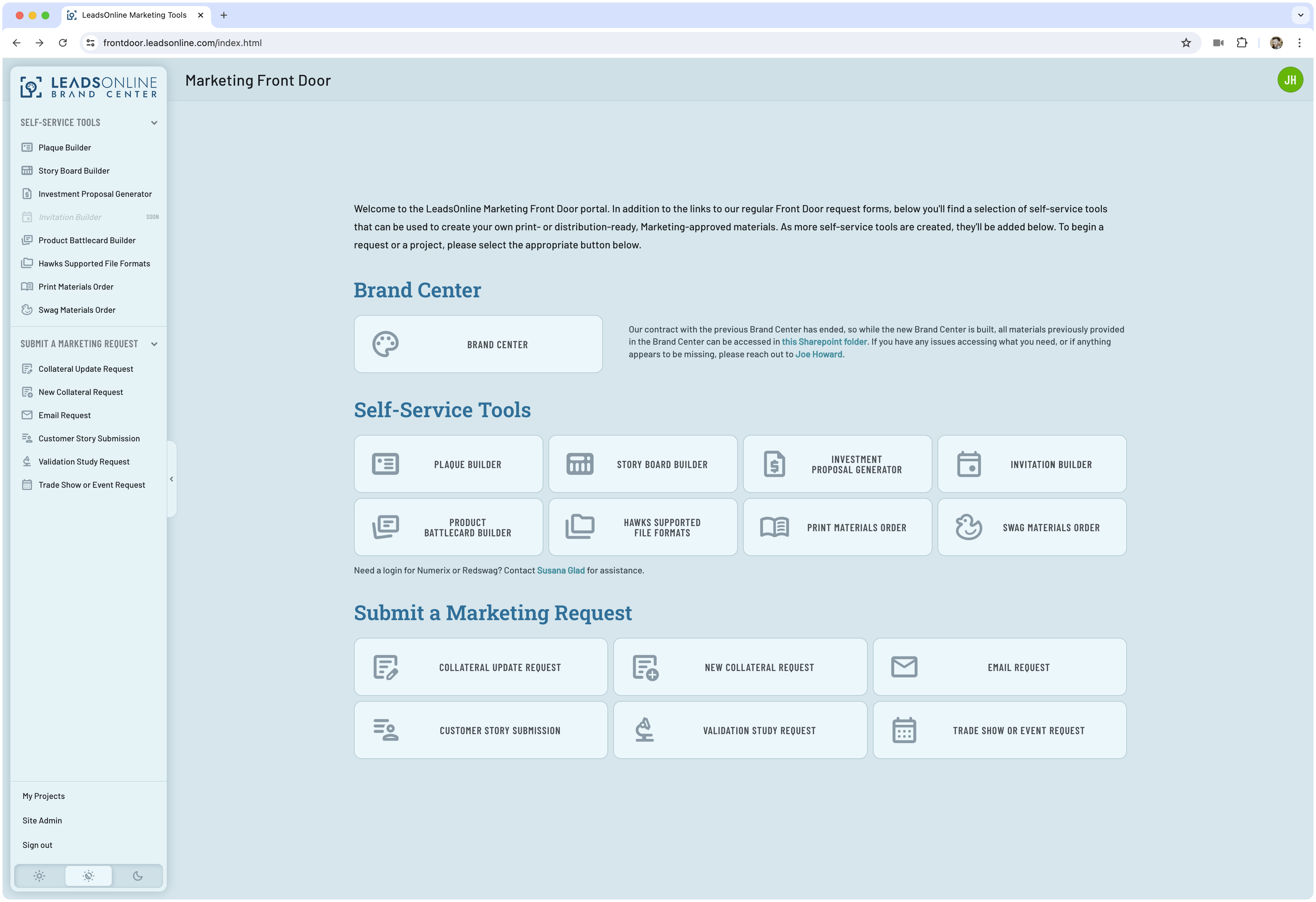
What started as one plaque utility gradually became a broader self-service layer inside the Marketing Front Door.

Plaque Builder
Creates brand-controlled, print-ready recognition plaques for customer milestone achievements.

Story Board Builder
Handles longer-form customer stories with flexible copy, image layouts, and an integrated stock-photo library.

Investment Proposal Generator
Produces consistent, presentation-ready pricing proposals without a Marketing production request.

Additional Builders
Product battlecards, invitations, ordering tools, and other utilities extend the same system to more recurring workflows.
From Tools to Platform
As the tools became more useful, the supporting system had to grow with them. The first Plaque Builder let users save a custom .plaque file to their computer, or email a copy to themselves, so they could reopen a project later when a customer requested changes. That idea expanded into custom file types for the other builders, including .sboard, .bcard, and .invite. Eventually, asking users to manage those files themselves felt like another unnecessary step, so I built a My Projects area where saved work could live directly inside the platform and be reopened from any device.
The agency-logo workflow became another piece of shared infrastructure. If a CEM cannot find an agency in the existing library, they can upload a logo from inside the builder. That submission comes to an admin queue for review, and once approved it becomes available to everyone. A one-time exception becomes a reusable asset instead of the same request coming back through Marketing again.
From there, the site grew into a more complete internal product with company SSO, role-based access, user and project administration, and analytics that help me understand how the tools are actually being used. Just as important, new builders increasingly reused the same components and services instead of behaving like separate one-off utilities.
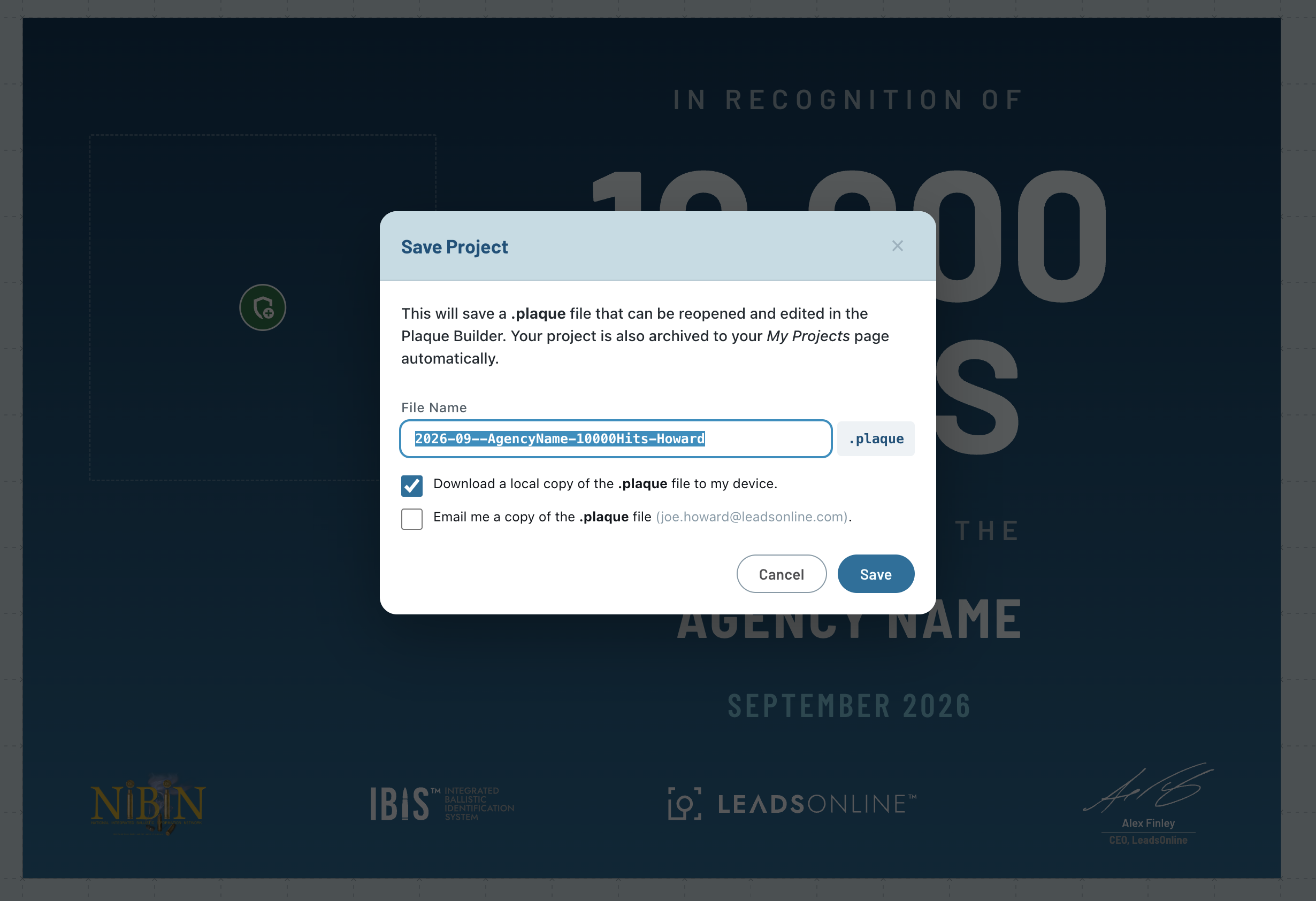
Project saving evolved from downloadable custom files into a shared My Projects library inside the platform.
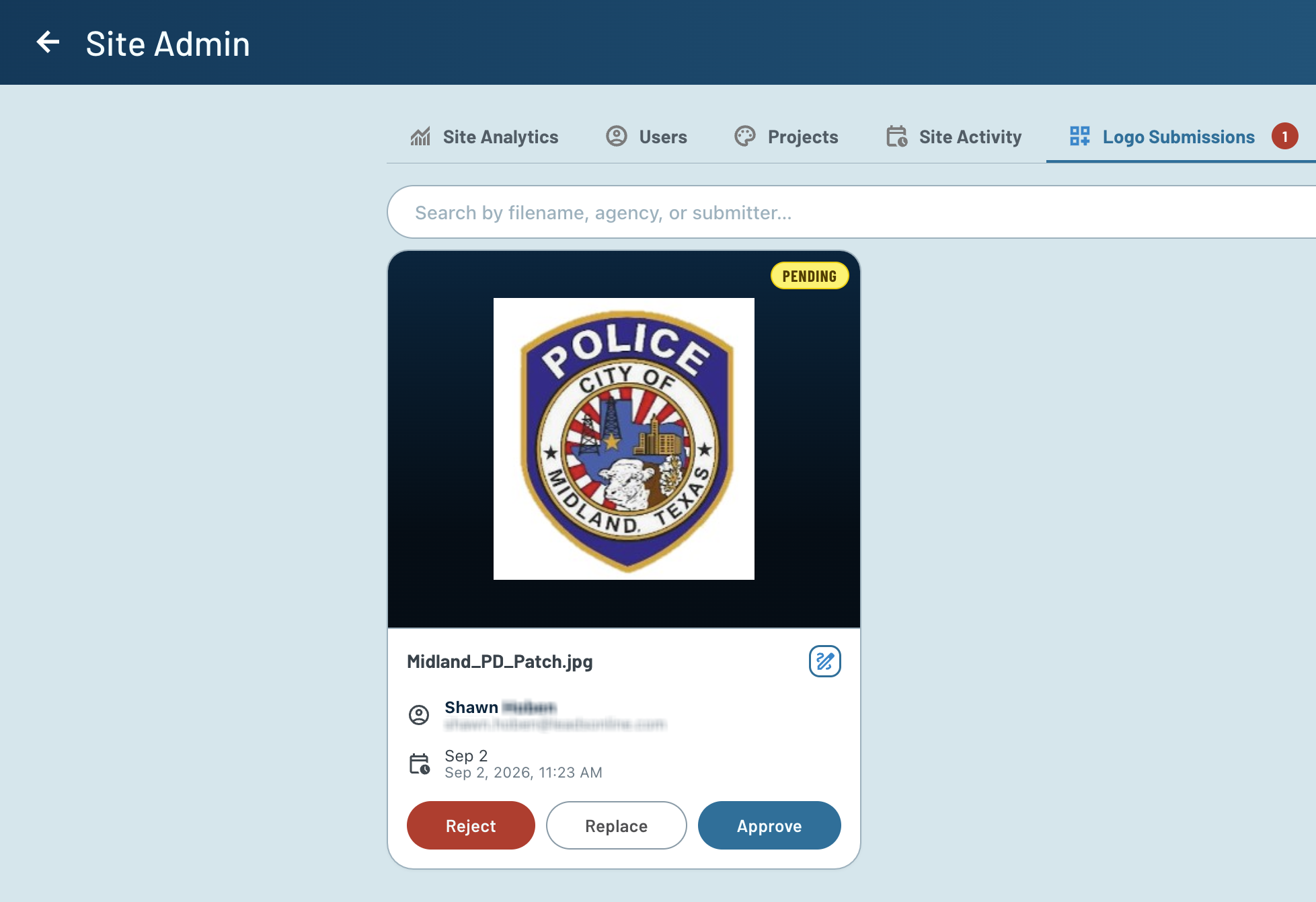
New agency logos move through a simple approval workflow before becoming available to everyone using the builders.
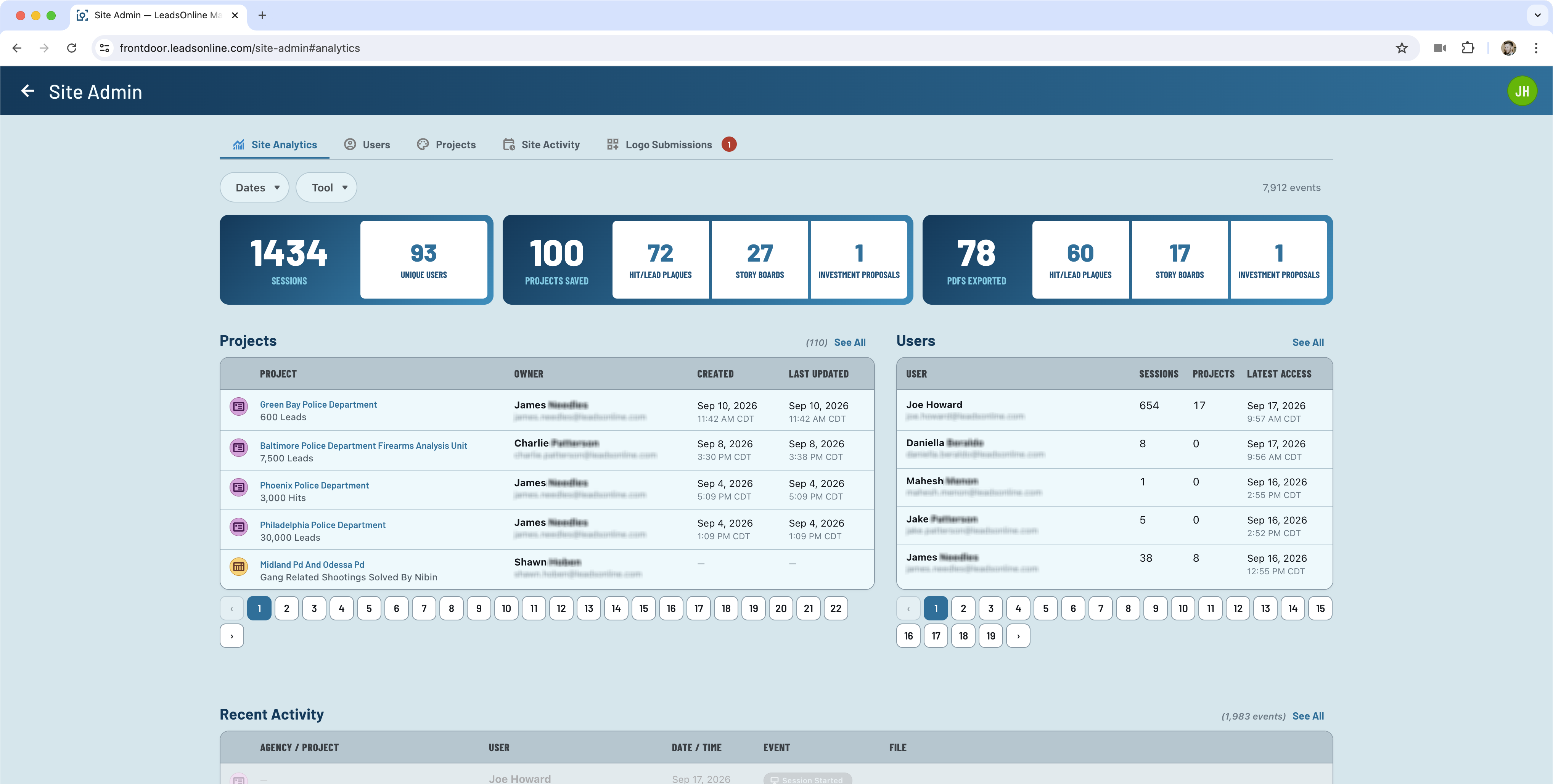
The admin layer provides visibility into adoption, saved work, exports, users, and site activity.
Becoming the Brand Center
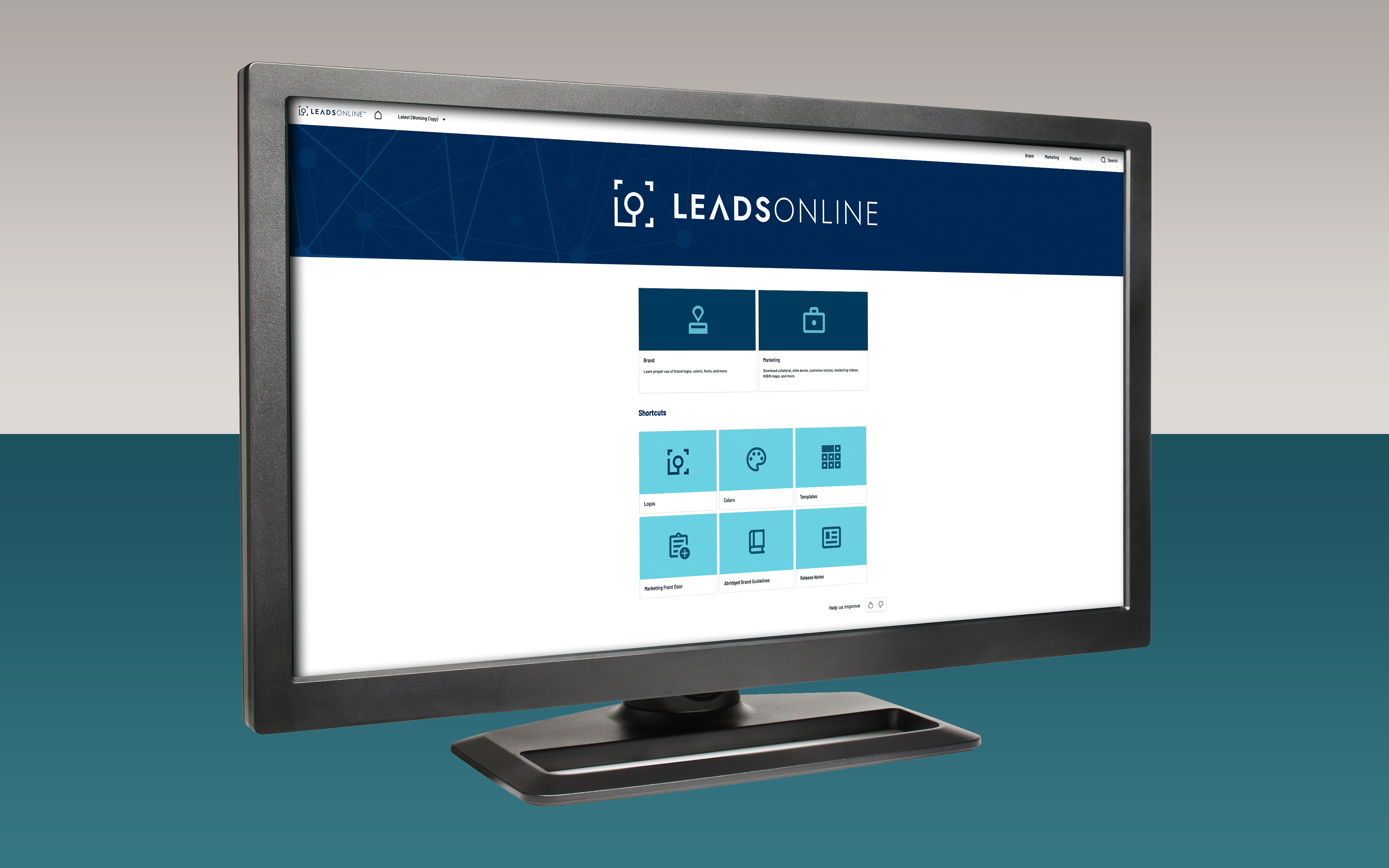
The Brand Center expansion brings standards and approved resources into the same environment as the tools built to use them.
The project eventually outgrew the idea of a toolbox. When LeadsOnline’s contract with our previous Brand Center platform ended in 2026, we chose not to replace it with another standalone service. By then, the Marketing Front Door already had the authentication, navigation, asset handling, and internal audience we needed to bring those functions into the same place.
The platform has since expanded into a one-stop Brand Center where employees can use the self-service builders, find current logos and templates, access approved collateral, reference brand standards, and even submit request tickets for custom Marketing needs. Instead of maintaining separate places for making work, requesting work, and finding the rules behind the work, they can all live inside the same system.
Outcomes
93
Unique Users
100
Projects Saved (in 6 Months)
78
Print-Ready PDFs Exported (in 6 Months)
600+
Annual Plaque-Production Hours Reclaimed
As of September 2026, the platform had logged more than 1,400 sessions across 93 users, with 100 projects saved and 78 print-ready PDFs exported. More important to me, the work is now happening where it belongs. CEMs can now respond to customers without waiting on Marketing, brand consistency is built into the process, and designers are no longer the production bottleneck for work that doesn’t require design judgment.
Reflection
This started because I wanted to get one repetitive task off my plate. What it taught me is that self-service does not mean removing design from the process. It means moving design upstream. Instead of making every plaque myself, I had to decide which choices should stay flexible, which should never change, and how much structure someone needs to make a good decision without a designer sitting beside them.
AI-assisted development made it possible for me to build the platform without a dedicated engineering team, but the more important shift was in how I thought about the problem. I stopped treating each request as an individual deliverable and started designing the infrastructure behind the work. That has become a much bigger part of how I think about creative leadership and brand stewardship.